
On Tuesday, digital radio specialist Pure shared an incredibly complicated breakdown of rights and royalties from a British perspective.
Here’s the US-centric version, shared with Digital Music News by royalty administration specialist Music Reports. Viewer discretion advised…
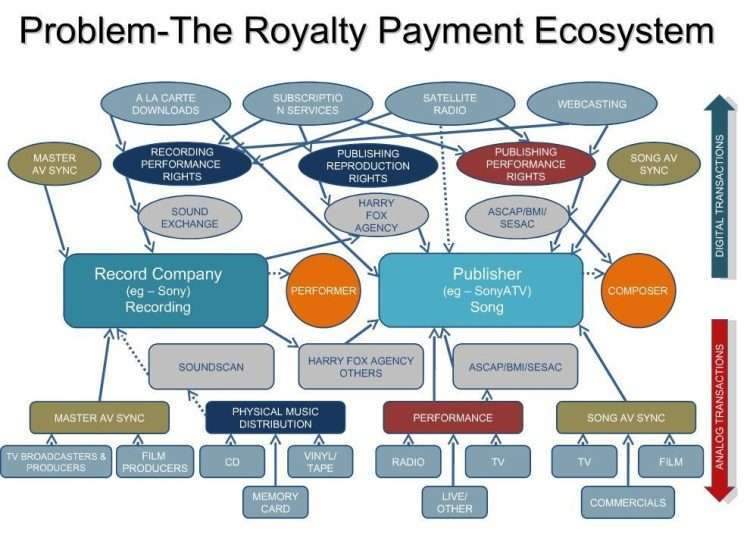
i see a few flaws here. should be more dotted lines going directly to the publisher. also noted that there are no payment lines from soundexchange to the artists.
this chart should be posted in a wiki file and everyone can add their two cents. the end result will likely be both more accurate and more humorous.
Steven. Noticing something similar but I think here that “record label” is dotted lined to the artist – not to speak for the authors of this graph, but you see the same thing with other pmts like physical music dist. that show an arrow to the label – even though those of course be sold direct to fan at a show and reported to SS, for example. But this I think assumes signed artists, though another slide could make sense for more DTF or DIY situations.
Check this out for a good laugh.
I have to say: presentation matters. This slide is not as sloppy as the other one, and so no one is really flipping out!
Steven is correct — there should be a line between SoundExchange and the performer. Whether an artist is signed to a label or not, 50% of digital performance royalties are paid directly from SX to the recording artist + other performers*, and 50% are paid to the sound recording copyright owner (usually a label).
*technically, the featured artist gets 45%, and the non-featured performers receive the remaining 5%, which is distributed via a royalty pool managed by AFM and AFTRA.
Note to self: be publisher. Ow.
lovely graphic
The lines seem to run the performance royalty for the sound recording for Downloads and Subscription Services through SoundExchange, when somehow those lines (for Downloads and On-Demand Subscription Services) should by-pass SoundExchange and go directly to the Record Company, as SoundExchange is only involved in noninteractive services. Not sure how you do that given the way that the diagram is set up, but it sure does make the point that the digital world does not allow for neat little lines
dotted lines or not, isn’t the point that it’s all a big mess? reminds me of a spaghetti western.
so in unrelated news, the music industry is confusing: any questions?
If you wondered why it’s so easy for music artists to be screwed out of money…
@andrewWk do you hate me or something
This will surely be a topic of discussion at the Bandwidth Music | Technology Conference