
Photo Credit: Live Nation
10 additional states have joined the DOJ’s antitrust lawsuit against Live Nation, which is facing more detailed allegations of anticompetitive practices in an amended complaint. Meanwhile, the Ticketmaster parent is pushing back against the updated filing amid the intensifying legal battle.
The Justice Department submitted that amended complaint (complete with the 10 new plaintiffs) today, after levying the initial antitrust suit towards the end of May. As we covered, the firmly worded action is seeking to unwind the 2010 merger that brought Live Nation and Ticketmaster together.
Predictably, the companies have long been pushing back against the claims; various reports pointed to the DOJ complaint for some time before it was actually filed. And among other things, Live Nation is currently attempting to shift the suit’s venue.
Returning to the underlying complaint, the attorneys general of Indiana, Iowa, Kansas, Louisiana, Mississippi, Nebraska, New Mexico, South Dakota, Utah, and Vermont have joined the suit, thereby upping the total state plaintiffs to an even 40 when also counting Washington, D.C.
Regarding the differences between the 128-page initial complaint and the 167-page amended suit, the newer filing doesn’t appear to contain any particularly groundbreaking alterations.
For example, the lengthier amended complaint dedicates a bit more time to describing the alleged anticompetitive and illegal relationship between Live Nation and Oak View Group (page 39). Similarly, the updated action further elaborates on the alleged role of Ticketmaster features in inhibiting competition (“there were less restrictive ways to reduce fraud” besides integrating “a constantly refreshing and encrypted barcode” to arrive at “a non-transferable digital ticket”).
Additionally, the amended complaint goes to noticeably greater lengths to demonstrate the purported consumer harm stemming from the alleged anticompetitive practices.
“Due to Live Nation’s unlawful conduct, fans across the United States, including fans in every Plaintiff State, have paid more in fees that are not negotiable and cannot be comparison shopped because there are no other options,” the document spells out, highlighting for good measure alleged innovations customers have missed out on for the same reason.
And in general, the amended action incorporates a variety of new visual resources, with supplemental details about topics like the defendant promoter’s 2018 agreement with 313 Presents. However, these potentially interesting tidbits have been redacted from the suit’s public copy.
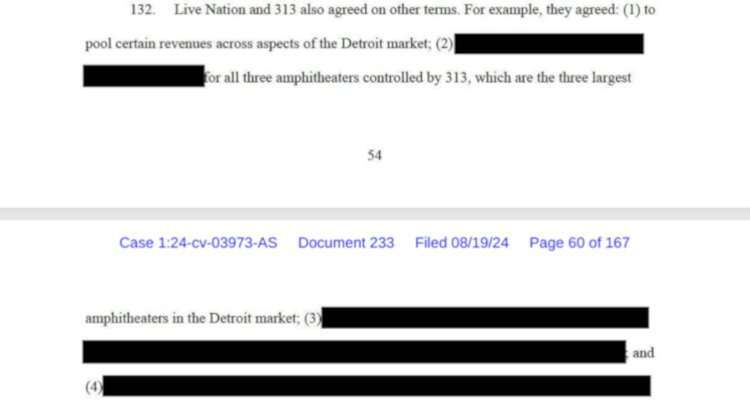
Portions of the public copy of the DOJ’s amended antitrust complaint against Live Nation and Ticketmaster have been redacted. Photo Credit: Digital Music News
After this piece was published, Live Nation reached out with a statement addressing the amended action: “There is nothing new in the Amended Complaint – the lawsuit still won’t solve the issues fans care about relating to ticket prices, service fees, and access to in-demand shows. We look forward to sharing more facts as the case progresses.”
Worth noting in conclusion is that (at least some) investors don’t appear especially worried about the complaint. When trading wrapped today, Live Nation stock (NYSE: LYV) was worth $96.53 per share, up 1.4% on the day, 5.4% across the past five trading days, and nearly 15% from this point in 2023.