
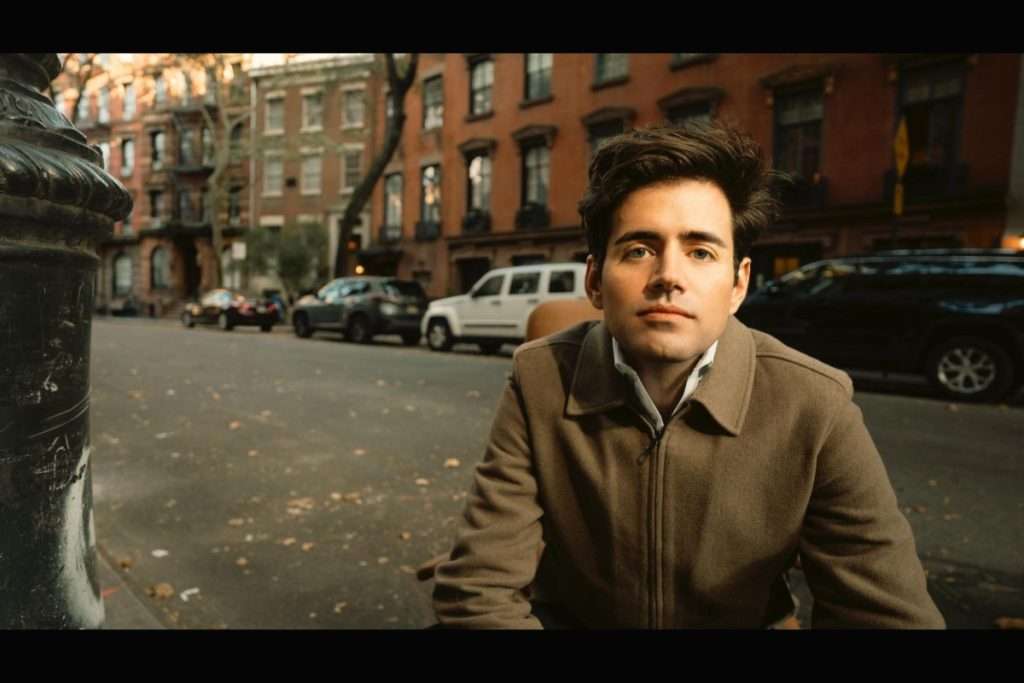
Photo Credit: Denice Flores Almendares
In a landscape crowded with singer-songwriters chasing viral hooks, Alwyn Morrison’s debut EP, Heartsplit, arrives like a quiet storm: intimate, deliberate, and deeply resonant.
Digital Music News is proud to partner with outside agencies to create opportunities for artists to be visible to the music industry.
Released independently on September 5, this six-track collection skips the pretense, unfolding like a personal map that traces the tender contours of love, loss, and rediscovery.
Morrison treats emotions as tangible places: valleys of grief, peaks of hope, and the winding paths in between. It’s not about grand gestures but the everyday geography of the heart, where feelings linger in city streets, empty rooms, and fading memories.
A World-Spanning Perspective
Morrison’s nomadic roots infuse every note. Born in Porto, Portugal, and shuttled between Munich, Rio de Janeiro, and now calling New York home, he embodies a fluid sense of identity — one forged in airports, languages, and cultural crosscurrents. This global lens sharpens the EP’s focus on displacement, both physical and emotional. The record’s second track, “Lenox Hill,” takes its name from Morrison’s own Manhattan neighborhood, where the bustle of the city becomes a mirror for emotional unrest, a love song to the spaces that hold us even when we’re falling apart.
Behind the Sound: A Collaborative Tapestry
Teaming up with producer Michael Carey (known for his work with Gwen Stefani and Pablo Alborán) and mixer Alex Aldi (Goo Goo Dolls, Passion Pit), Morrison crafts a sound that’s polished yet raw. Co-writers Michael Ales and Michael Kooman bring melodic precision to his confessions, striking a balance between vulnerability and catchiness. The EP’s closer, “Maybe in Another World,” features an arrangement by Grammy and Tony Award nominee August Eriksmoen, whose credits include Only Murders in the Building — adding a sweeping, almost theatrical hush that hints at possibility without promising resolution.
Morrison takes the reins on visuals too, directing the EP’s music videos alongside cinematographer American-French Viken Kazandjian. The visuals extend the EP’s language of emotional cartography — soft light, slow pans, textures that feel tactile rather than digital. Morrison’s direction mirrors his songwriting process: patient, observational, and attuned to the invisible geography between people. Each frame lingers, asking the same question as his music — how do we locate ourselves after rupture?
From Byline to Melody: The Journalist’s Edge
Before he ever recorded his own songs, Morrison worked as a music journalist. The pivot from journalism to artistry adds a layer of introspection. His lyrics probe like investigative pieces, dissecting rather than declaring. Heartsplit plays like dispatches from the soul’s front lines: “Chained” grapples with the weariness of loving through someone’s storm, while “The City” pulses with the New York City’s ceaseless energy, always one breath away from stillness. There’s no rush to climax; melodies meander, vocals hover with intentional imperfection, and silences speak volumes. It’s listening music, not playlist fodder — echoing ’90s rock vibes without overcomplicating, accessible yet demanding engagement in an era of skim-and-skip streaming.
No Haste, No Waste
What sets Morrison apart in the indie fray is his patience. Heartsplit shuns trends for timelessness, building atmospheres over bombast. Hooks emerge organically, moods simmer, and choruses reward repeat spins. Heartsplit isn’t just a breakout — it’s a blueprint for emotional sustainability. Morrison builds not on hype but on substance, creating songs that grow with you, outlasting fleeting cycles. For an artist on the ascent, he already feels essential: a cartographer of the unseen, turning heartache into a map we all recognize. If you’re tuning in, prepare to linger. This is terrain worth exploring.