

Photo Credit: Spotify
Spotify revealed its Q2 2024 financials yesterday, revealing $4.13 billion in revenue, which is an increase of 20% year-over-year. The stock has risen to five-year highs on the news as investors gain confidence that Spotify can remain profitable.
Spotify says it has around 626 million monthly active users (up 15% YoY), with paid subscribers spiking 12% YoY to hit 246 million. The rest of Spotify’s MAUs are ad-supported listeners, which have also increased 15% compared to the previous year. Around 33% of its MAUs reside outside of North America, Latin America, and Europe in its broader ‘rest of the world’ category.
North America (27%) and Europe (38%) continue to make up the lion’s share of Spotify subscribers, though its world category grew 13% during Q2 2024. Spotify missed its Q2 MAUs guidance, but investors don’t seem too concerned as the stock rose 12% yesterday and continues to make gains today.
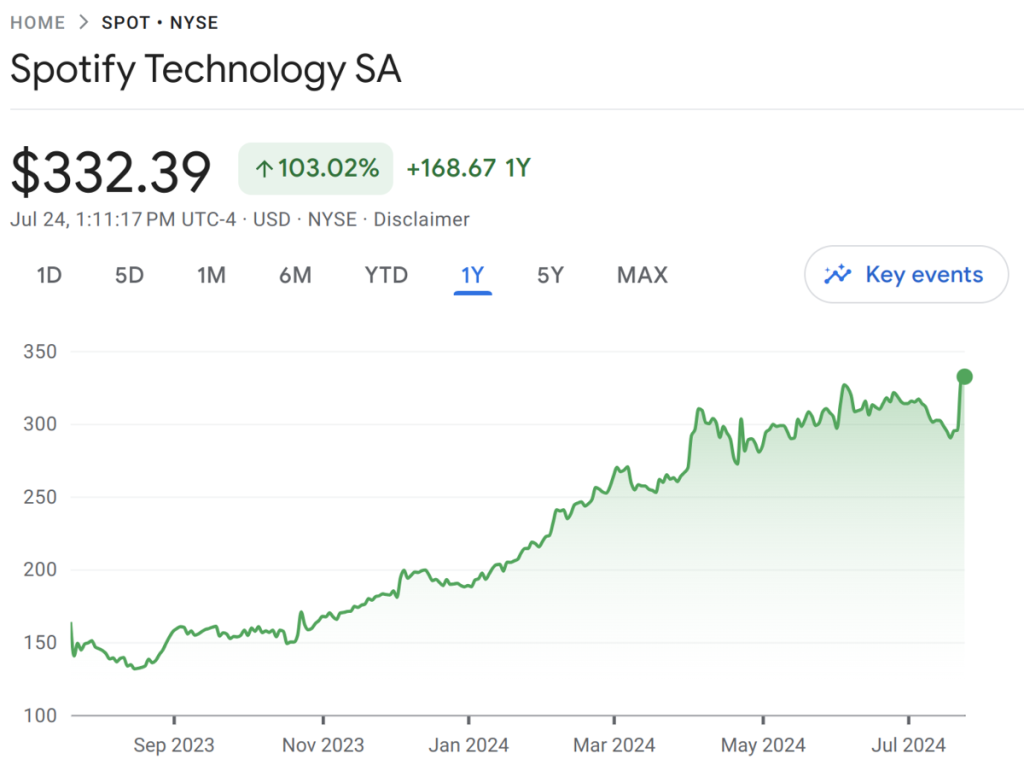
Photo Credit: Google
The last time Spotify’s stock reached these heights was in 2021, during its meteoric growth phase due to its podcast expansion strategy and everyone at home tuning in to music and podcasts while working.
“It’s an exciting time at Spotify,” CEO Daniel Ek told investors. “We keep on innovating and showing that we aren’t just a great product, but increasingly also a great business. We are doing so on a timeline that has exceeded even our own expectations. This all bodes very well for our future.” During that investor call, Ek confirmed that a higher-priced Spotify tier is on the way that will support lossless audio.
Ek says he expects the ‘deluxe version’ of its current premium tier would cost around $5 more—placing it around $18 per month. Ek did not provide a launch window for this higher tier, stating it is still in early development stages. Remember Spotify announced its HiFi tier back in 2021 but still has not released a competitor for Apple’s support of spatial audio.